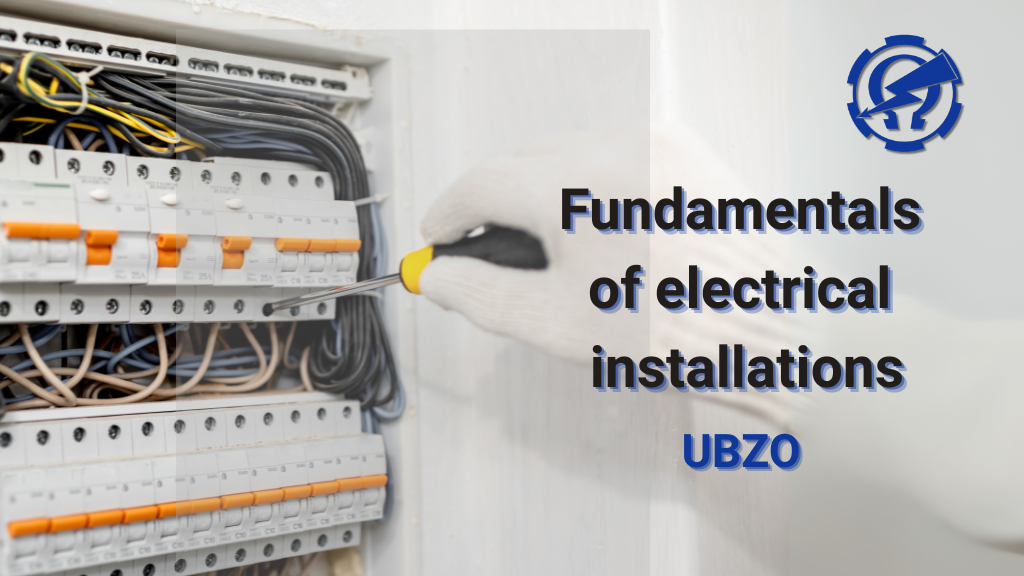
Have you ever wondered how it is possible that we work every day with devices powered by 230 V – or 110 V, or 240 V – without feeling afraid? Inside every cable flows an electric current that, under the wrong conditions, can be danger for life.
Yet we plug in chargers, switch on lights, connect appliances and operate equipment without thinking about how much energy we handle.
Yet we plug in chargers, switch on lights, connect appliances and operate equipment without thinking about how much energy we handle.
But do we really know when an installation is safe, and when it only seems safe?
Are we taking good care of our installations? Are we taking care of them at all?
Can we fully trust our protective devices?
Can installations built in the 1970s safely carry today’s loads?
Can we fully trust our protective devices?
Can installations built in the 1970s safely carry today’s loads?
This course gives the answers.
You will learn:
- the basics of DC and AC circuits and the fundamental laws of electrical engineering,
- how electric shock protection works, and when RCDs may not operate,
- the differences between TN, TT and IT networks,
- the purpose of switchboard equipment and protective devices,
- how to select installation accessories: switches, sockets, light sources, transformers and power supplies,
- how cables and conductors are chosen in real installations,
- how to read electrical diagrams and technical documentation,
- how protective measurements are carried out,
Course format: classical lecture, short videos, clear presentations, practical tasks and Moodle quizzes.
This course is designed for students from various engineering programmes — including those new to electrical engineering.
This course is designed for students from various engineering programmes — including those new to electrical engineering.
- Nauczyciel: Fice Marcin
- Nauczyciel: Piwowar Anna
- Nauczyciel: Piwowar Anna